Knowledge belongs into the system – not in people’s heads
In many textile service companies, processes run smoothly because certain employees have built up extensive practical knowledge over many years. They know which item belongs in which wash program, which delivery route makes sense, or roughly how many containers are currently in circulation. That knowledge is invaluable – but it is also fragile, because it depends on specific individuals.
To create real operational security, the objective cannot simply be to spread knowledge from one person to several others. It needs to be embedded in a digital system, enabling both new and existing staff to access it and ensure efficient, consistent operations.
When experience becomes a risk
As long as the experienced team member remains in the business, everything appears straightforward. But what happens in cases of illness, staff turnover or retirement? Knowledge transfer under time pressure is rarely complete. Four new employees do not automatically replace the competence of one seasoned operative – particularly when processes are not clearly documented but passed on purely through personal experience.
This is where the difference between experience and structure becomes clear:
Experience is individual. Structure is repeatable.
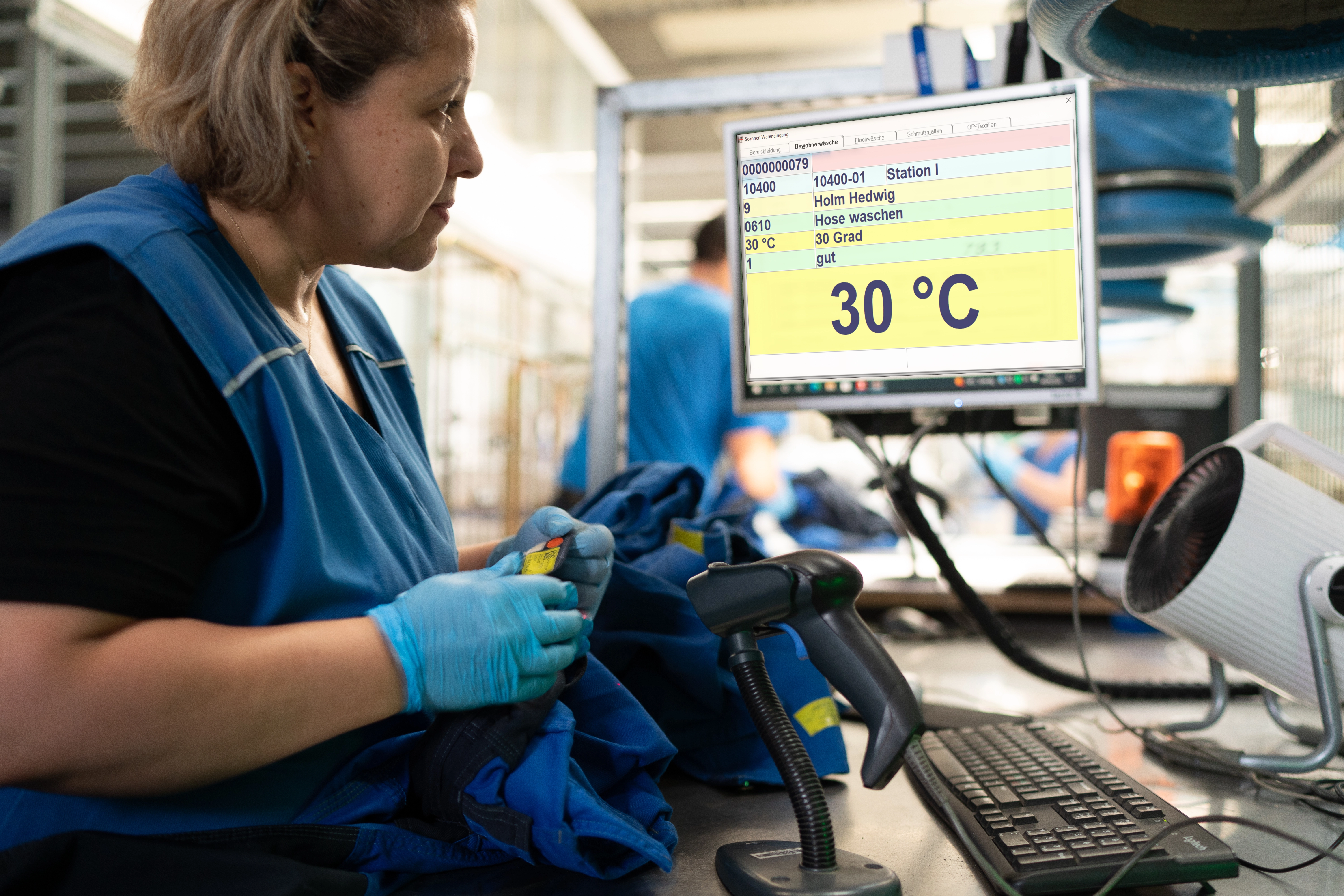
A system that automatically displays the correct wash program when a textile is scanned does not make knowledge redundant – it makes it accessible. It ensures processes are traceable, standardised and independent of individual employees.
More staff does not solve the transparency issue
Many operators do not know precisely how many cages or containers they hold in stock, or where losses occur. The same applies to linen losses. Recruiting additional staff does not automatically create clarity. Without structured data capture, decisions are often based on assumptions rather than facts.
What is missing is transparency regarding:
- where stock is located,
- how volumes are developing,
- where losses are occurring.
This level of transparency does not arise from conversations on the shop floor, but from consistent data capture within the system.
Planning is more than experience
Route planning is another area where businesses rely heavily on individual knowledge. Routes are adjusted based on experience, customers are rescheduled “by feel”, and information is maintained in spreadsheets. Modern systems, however, consider not only distances, but also vehicle capacities, opening hours and historical data. They calculate alternatives within seconds and provide an objective basis for decision-making.
Experience remains important – but it should be supported by data.
Skills shortages increase the tisk
The shortage of skilled labour highlights why person-dependent knowledge represents a strategic risk. It is becoming increasingly difficult to recruit employees who will immerse themselves in complex processes for years. At the same time, many operations employ teams with varying levels of language proficiency.
Digital software systems help by making processes visible, guiding workflows and reducing onboarding times. Knowledge is no longer passed on verbally but provided in a structured way.
Systemes strenghthen people
The key question is not whether people or systems are superior. Digital systems do not replace experience – they safeguard it. They create consistency, transparency and a reliable data foundation for business decisions.
Knowledge belongs in the system because only when know-how is accessible to everyone – rather than locked in individual minds – can businesses operate efficiently, scale sustainably and remain fit for the future.
 CONTACT US